3 Materials U.S. States Are Banning From Kitchens
At least six states have passed laws to pull "forever chemical" cookware off store shelves. Here's what's on the list, why worn pans worry scientists, and the one metal with nothing to flake.
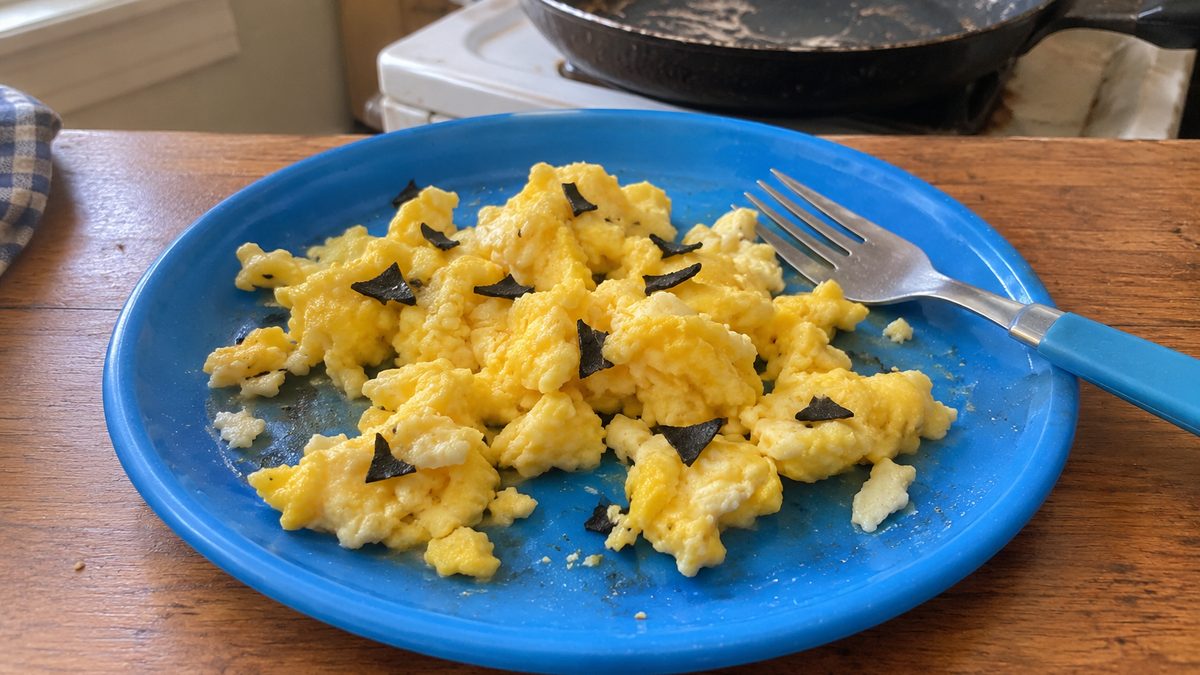
Take a look at the pan you cooked with this week. If it's black and slick, a growing list of states no longer want it sold.
Minnesota went first. Since January 1, 2025, stores there can't sell new cookware with PFAS added on purpose.1 Colorado and Maine followed on January 1, 2026.2 Rhode Island's ban starts in 2027.3 Connecticut and Vermont come in 2028.4,2
The target is a family of man-made chemicals called PFAS. Most people know them as "forever chemicals." The U.S. EPA says many of them break down very slowly and can build up in people over time.6
The CDC has found that nearly all people in the U.S. have PFAS in their blood.7
So what exactly is being pushed out of kitchens? Here are the 3 materials on the list, and what to do if one is in your cabinet right now.
1. The Classic Nonstick Coating
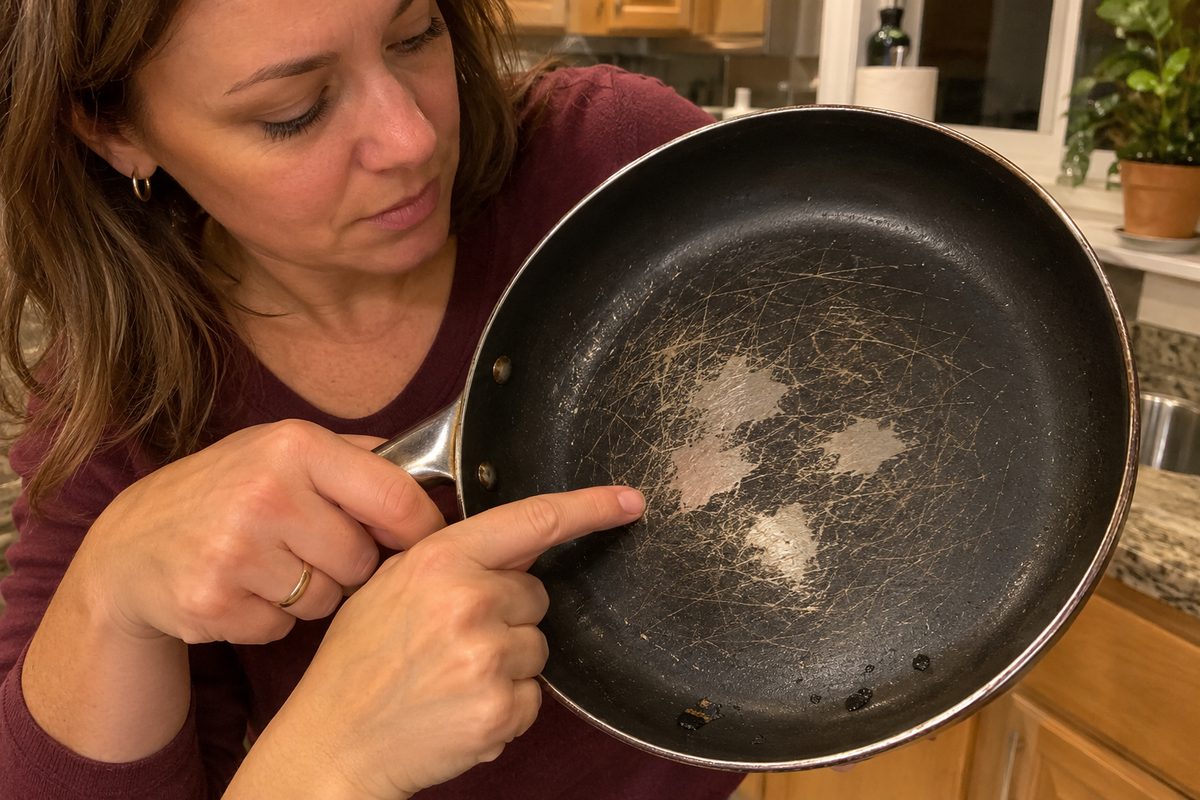
Most nonstick pans are coated with a slick plastic called PTFE. You probably know it as Teflon. It belongs to the PFAS family.8
Minnesota's regulators say the state's cookware ban covers items with "a food contact surface that has a nonstick PFAS coating."3
The worry isn't only how these pans are made. It's what comes off them as they wear.
In 2022, scientists at Flinders University and the University of Newcastle in Australia studied what a nonstick coating sheds as it breaks down.8,9 They found that just one surface crack can release about 9,100 tiny plastic particles. A broken patch of coating released about 2.3 million.8
Most are far too small to see. What they do inside the body is still unknown. One of the researchers said they "might be a health concern" and need more study.8
Heat adds another problem. Overheated nonstick pans can give off fumes that cause flu-like symptoms, nicknamed "Teflon flu." Poison centers logged over 265 suspected cases in 2023, the most since 2000.10
One Ohio mom told us how she found out. "My son pushed his eggs away and said there was black stuff in them," she said. "I looked at the pan. The coating was coming off into his breakfast."
2. The "Titanium" Nonstick Coating
This one surprises people. Many pans sold as "titanium" are not titanium where it counts.
Most are a regular nonstick coating with a little titanium mixed in to make it last longer. One of the biggest pan makers in the world says its coating is "reinforced with titanium particles."11 On its own website, the same company says its nonstick coating "contains PTFE, which is a specific type of PFAS."12
So your food never touches titanium. It touches the same kind of coating as #1.
If you bought one, you weren't careless. You paid extra to be safe. The box just didn't tell you what your food would touch.
3. Grease-Proof Food Packaging
The EPA lists grease-resistant paper, fast food wrappers and microwave popcorn bags as common places PFAS show up.6
California banned PFAS in food packaging starting in 2023.5 Minnesota followed in 2024.1
The easy swap: make popcorn on the stove, in a pan with no coating.
"Do I Have to Throw Out My Pan?"
The laws stop stores from selling new PFAS cookware. They don't make you toss the pans you already own.13
That choice is yours. Here's a quick way to make it.
The 10-Second Pan Check
Run your fingernail across the cooking surface. If it catches on scratches, the coating is wearing.
Look for dull grey or silver spots where it used to be black.
Check its age. An ER doctor on ABC News said to get rid of nonstick pans after three to five years.10
If your pan fails any one of these, it's time for a new one. The question is what to replace it with.
Why the Usual Swaps Let People Down
- Ceramic: It looks clean, but it's still a coating. Once it chips, food sticks to the bare spots and the pan is done.
- Cast iron: No coating, but it's heavy, it needs seasoning, and it reacts with acidic foods like tomato sauce.
- Stainless steel: Tough, but eggs stick unless you use a lot of oil and get the heat just right.
The Metal With Nothing to Flake
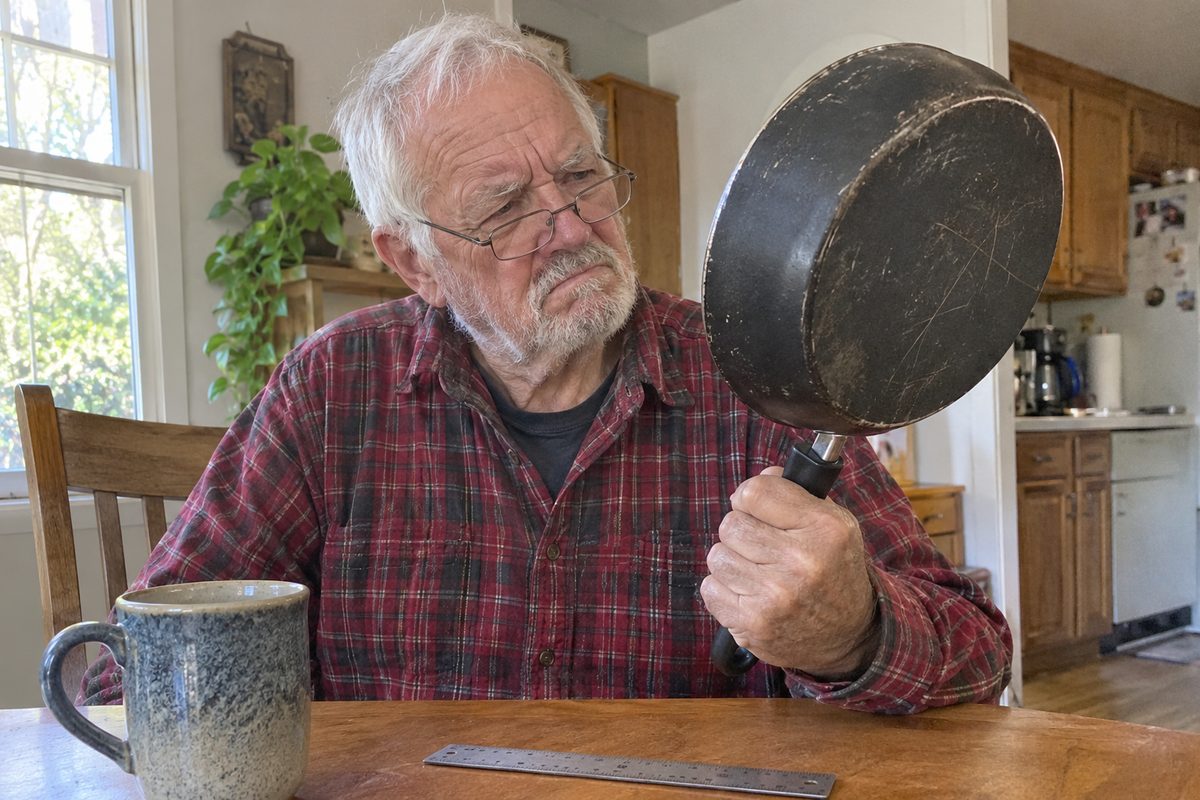
Ask a metalworker what never flakes and you'll hear one answer: solid titanium. There's no coating on it, so there's nothing to peel.
"Titanium" alone isn't enough, though. Ask what grade.
Grade 1 is the purest grade of commercial titanium. It is at least 99.5% titanium.14 Of the four pure grades, it has the highest resistance to corrosion.14 And it's one of the four grades named in the official standard for titanium used in surgical implants.15
The rule of thumb is simple. If a pan says titanium but won't tell you what your food actually touches, keep shopping.
The Pan Built Around That Rule
That's the idea behind the Grade One pan. The name is the promise.
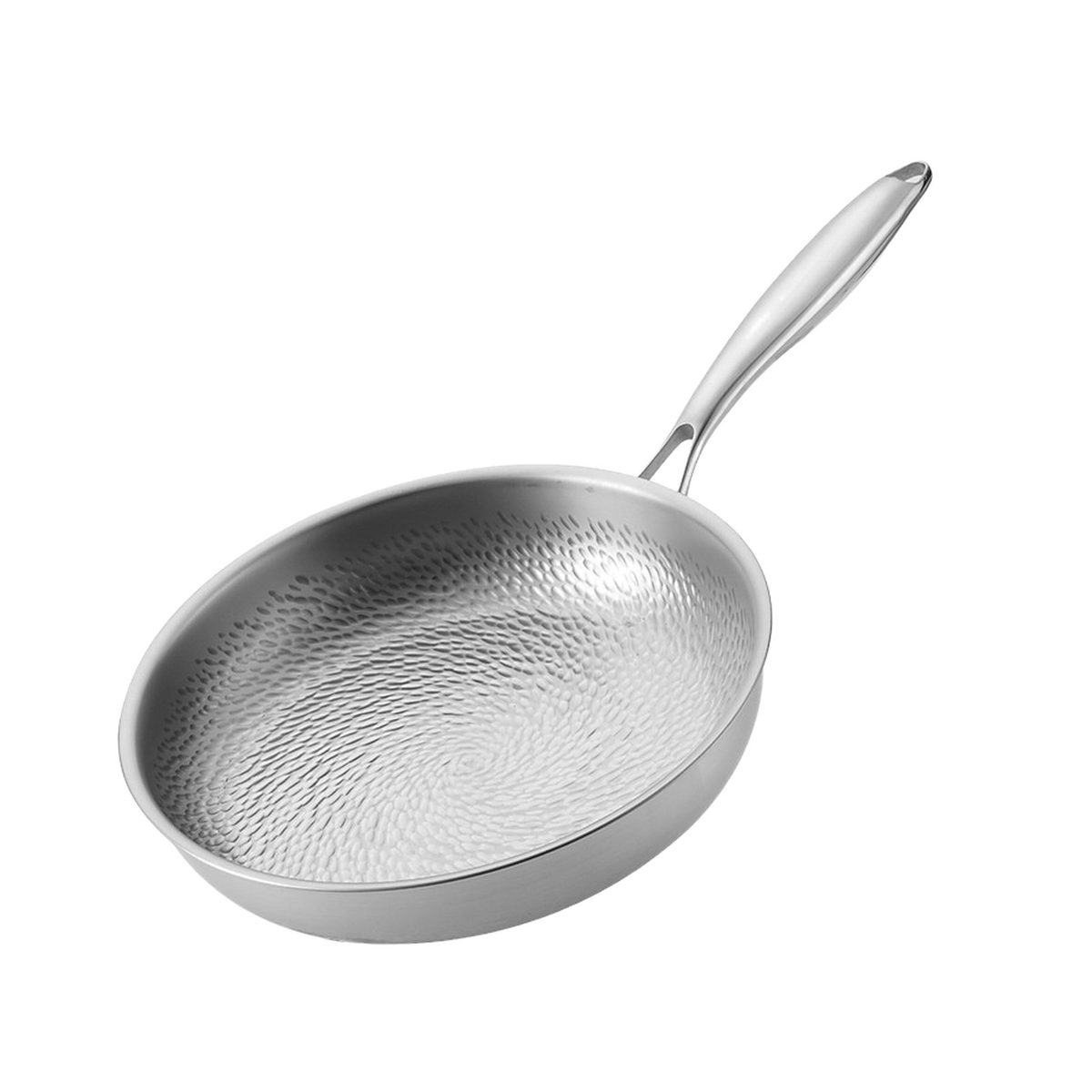
- Real titanium cooking surface. SGS-certified at 99.89% titanium, with no coating on it. Nothing to scratch off into your food.
- Lab tested. No PFAS, no PFOA, no PTFE. No lead, no cadmium and no heavy-metal leaching.
- Metal utensils and high heat are fine. It's made to resist scratches.
- Lifetime warranty. The last frying pan you should need to buy.
See the Grade One Pan90-day money back guarantee · Free 2 to 5 day shipping
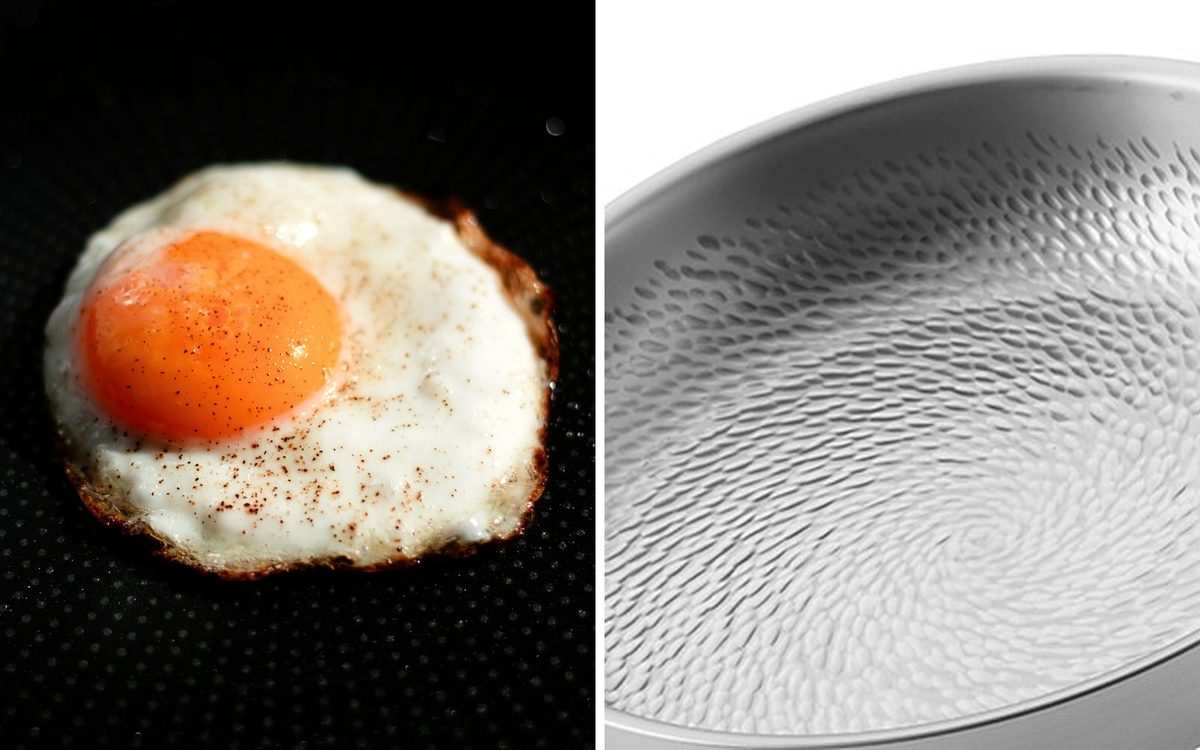
One honest note. Real titanium is not a slip and slide like a brand new Teflon pan. Warm it on medium for a minute, add a little butter, then the food. It lifts right off.
The Ohio mom switched after the morning with the flakes. "I scraped it with a metal spatula on purpose," she said. "His eggs were just yellow. That's all I wanted."
The Black Friday Deal
Grade One is running its Black Friday sale right now.
Every order also gets:
- A free matching titanium lid
- 6 free cooking eBooks
- Free 2 to 5 day shipping
- 90 days to try it. If you don't love it, send it back for your money back.
- A lifetime warranty. If it ever fails, it gets replaced.
Check Today's Black Friday Price90-day money back guarantee · Free 2 to 5 day shipping
Questions Readers Ask
Is it really titanium, or just another coating?
The cooking surface, the part that touches your food, is SGS-certified 99.89% titanium. There is no coating on top of it.
Will my eggs stick?
Not if you treat it right. Warm it on medium, add a little butter or oil, then the eggs. Start on medium, not high. Let the pan do the work.
Can I use metal utensils? What about the dishwasher?
Yes to metal spatulas, whisks and tongs. There's no coating to scratch. It works on gas, electric and induction stoves, and it can go in the dishwasher.
Why does it cost more than a nonstick pan?
A coated pan is made to wear out. If you replace a nonstick pan every three to five years, as one ER doctor advised,10 you keep paying for the same coating again and again. One titanium pan with a lifetime warranty is meant to be your last.
What if I don't like it?
You get 90 days to try it. If it's not for you, send it back for your money back. And the lifetime warranty covers it after that.
You Don't Have to Wait for a Law
States are pulling these pans off store shelves one by one. But no law will come into your kitchen and take the old pan off your stove.
That part is up to you. Do the fingernail check tonight. If your pan fails, make it the last coated pan you ever buy.
Get the Grade One Pan90-day money back guarantee · Free 2 to 5 day shipping
P.S. Remember the two words to look for on any pan: Grade 1. Real titanium, nothing to flake, and a lifetime warranty.
3 Comments